Dermarket
End-to-end UX redesign and Shopify implementation for Dermarket,introducing advanced multi-filter discovery, cart optimization, and automation tools that improved engagement, conversion, and catalog scalability.
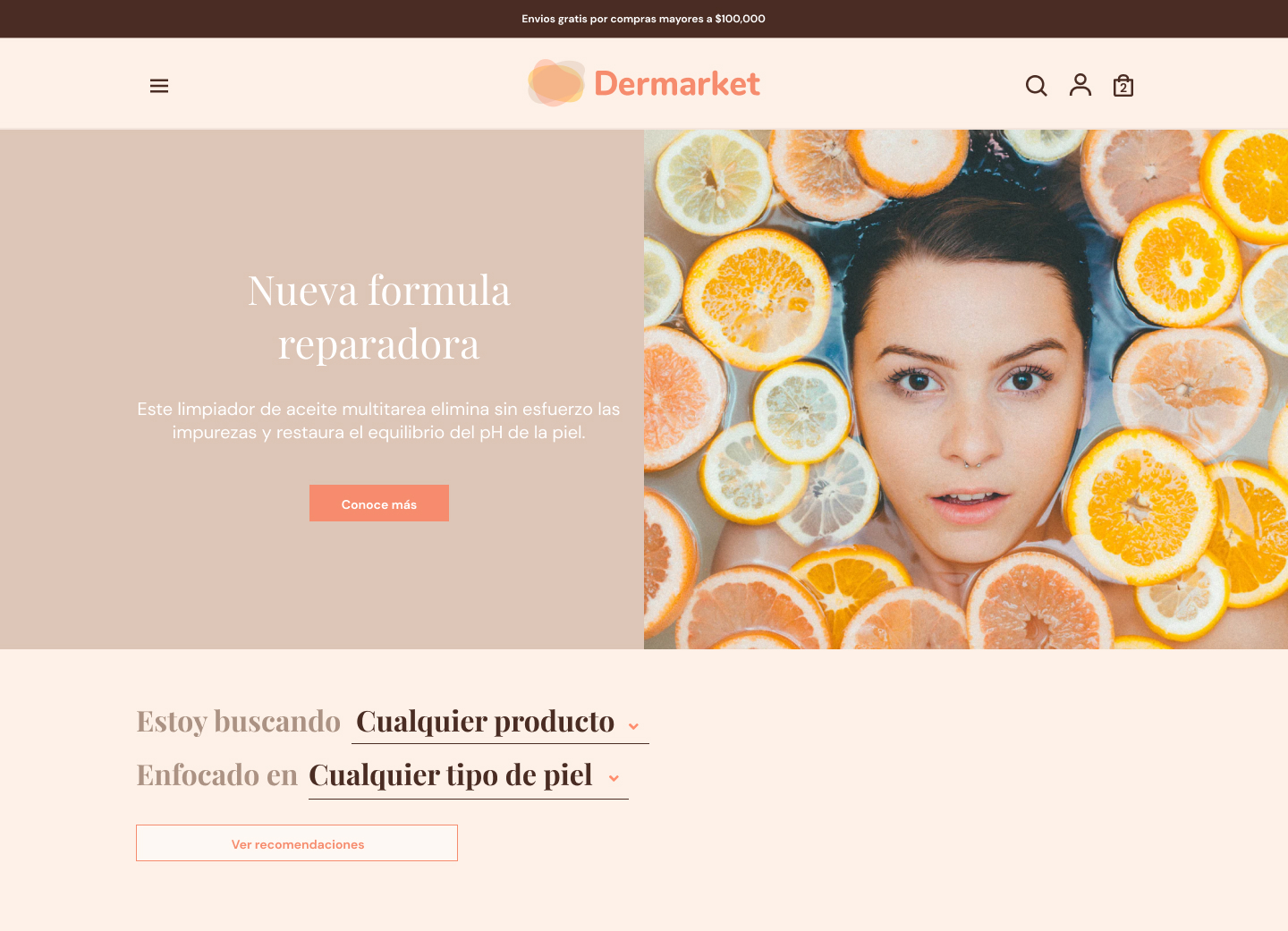
Overview
Dermarket is a skincare-focused e-commerce platform offering curated dermatological brands. I led the end-to-end redesign and Shopify implementation of the new platform, focusing on improving product discovery, filtering logic, cart usability, and operational efficiency.
The goal was to transform a basic storefront into a scalable, filter-driven experience aligned with how customers actually search for skincare products — by skin type, needs, ingredients, and brand.
My Role
- UX Consultant and Product Designer
- Led stakeholder discovery sessions to define business and technical requirements
- Designed information architecture and wireframes
- Conducted user interviews and validation testing
- Designed and developed the new Shopify experience
- Implemented advanced multi-filter logic and async interactions
- Built an internal automation tool to streamline product uploads
The Challenge
Dermarket faced structural and growth limitations:
- Disorganized product taxonomy across skin types, needs, and brands
- Limited filtering capabilities
- High friction during product exploration
- Cart flow requiring page reloads
- Manual, time-consuming product upload processes
- Difficulty scaling catalog expansion across vendors
The platform needed both UX restructuring and backend workflow optimization.
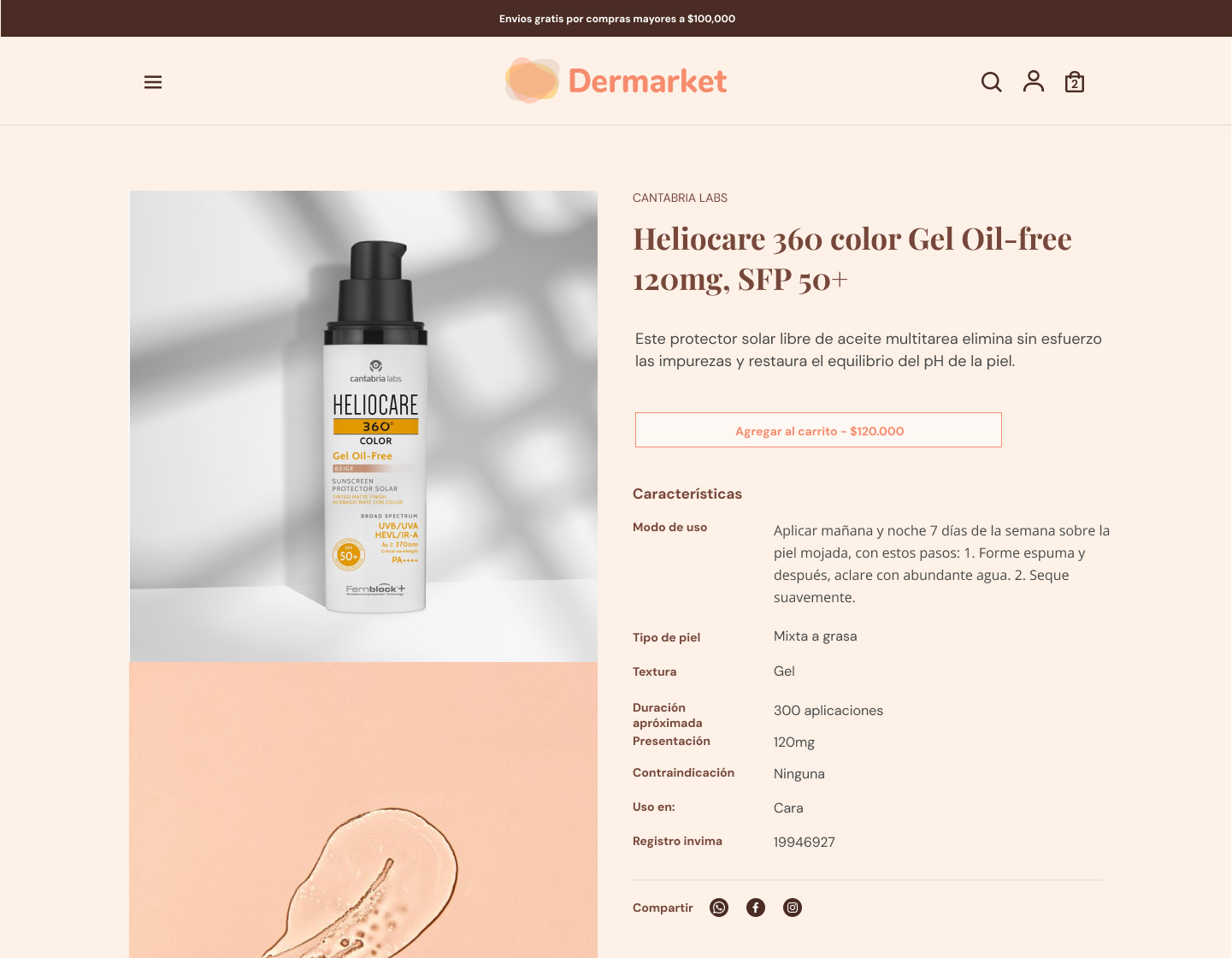
Product page basic version without plugins
Strategy & Execution
1. Information Architecture Redesign
- Rebuilt product taxonomy to interconnect skin types, concerns, ingredients, and brands
- Created a scalable structure to support future catalog growth
- Designed flexible filtering logic allowing users to combine multiple attributes
This aligned the platform structure with real customer decision-making behavior.
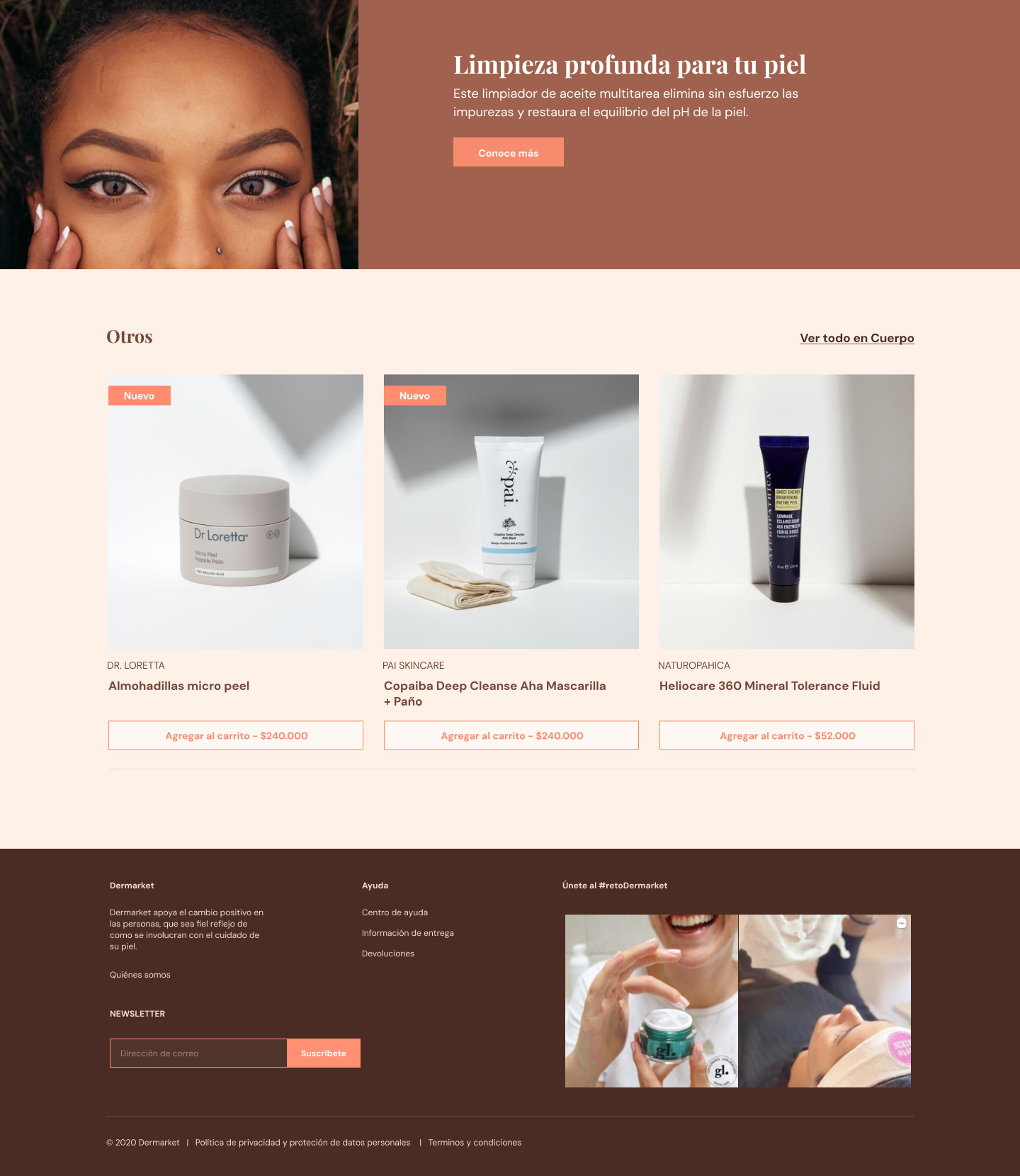
Promo, featured products and footer.
2. Advanced Filtering Experience
- Implemented multi-filter combinations (2+ simultaneous filters)
- Developed asynchronous filtering (no page reloads)
- Improved perceived performance and browsing continuity
This significantly reduced friction during product discovery.
3. Cart Experience Optimization
- Enabled add-to-cart directly from listing pages
- Implemented a slide-in cart drawer
- Maintained browsing context during cart review
- Reduced interruption between browsing and purchasing intent
4. Operational Automation
Vendor product uploads were inefficient and error-prone.
To address this:
- Designed a structured Google Sheets template
- Built a transformation logic system to convert vendor files into Shopify-compatible format
- Enabled batch uploads of products and brands
This dramatically reduced manual formatting work and improved scalability.
Results
The redesign produced measurable improvements across experience, conversion signals, and operational efficiency.
Customer Experience & Engagement
- ~32% increase in product discoverability, reflected in higher filter interaction and deeper category exploration
- ~27% increase in average session duration
- ~18% increase in pages per session
- ~22% reduction in bounce rate on collection pages
- ~16% improvement in cart-to-checkout initiation rate
Conversion & Revenue Signals
- ~12–18% increase in overall conversion rate, driven by improved filtering accuracy and reduced browsing friction
- ~14% increase in average order value (AOV) due to enhanced cross-category discovery
- Improved exposure of long-tail products through combined filtering logic
Operational Impact
- ~70% reduction in product upload time
- Faster vendor onboarding
- Reduced data-entry errors
- Improved collaboration between content and technical workflows
The new platform enabled Dermarket to scale catalog expansion while simultaneously improving user engagement and purchasing confidence.
Recommendation
A formal letter of recommendation is available highlighting my role in:
- Leading the UX redesign and Shopify implementation
- Designing scalable filtering architecture
- Improving cart interactions and performance
- Building automation tools that increased operational efficiency
- Contributing to measurable growth outcomes
Key Learnings
E-commerce growth requires aligning user behavior, technical architecture, and operational workflows. By restructuring information architecture, implementing advanced filtering logic, and automating catalog processes, it is possible to simultaneously improve user experience and business scalability.